
Want to Boost Sales Without Increasing Your Budget? Use This CRM Strategy!

Products can be imitated. Prices can be undercut. But a strong relationship with customers? That is something competitors can almost never replicate. This is precisely why Customer Relationship Management or CRM is no longer merely an operational add-on, but rather the very foundation upon which sustainable business growth is built.
1. What Is Customer Relationship Management (CRM)?
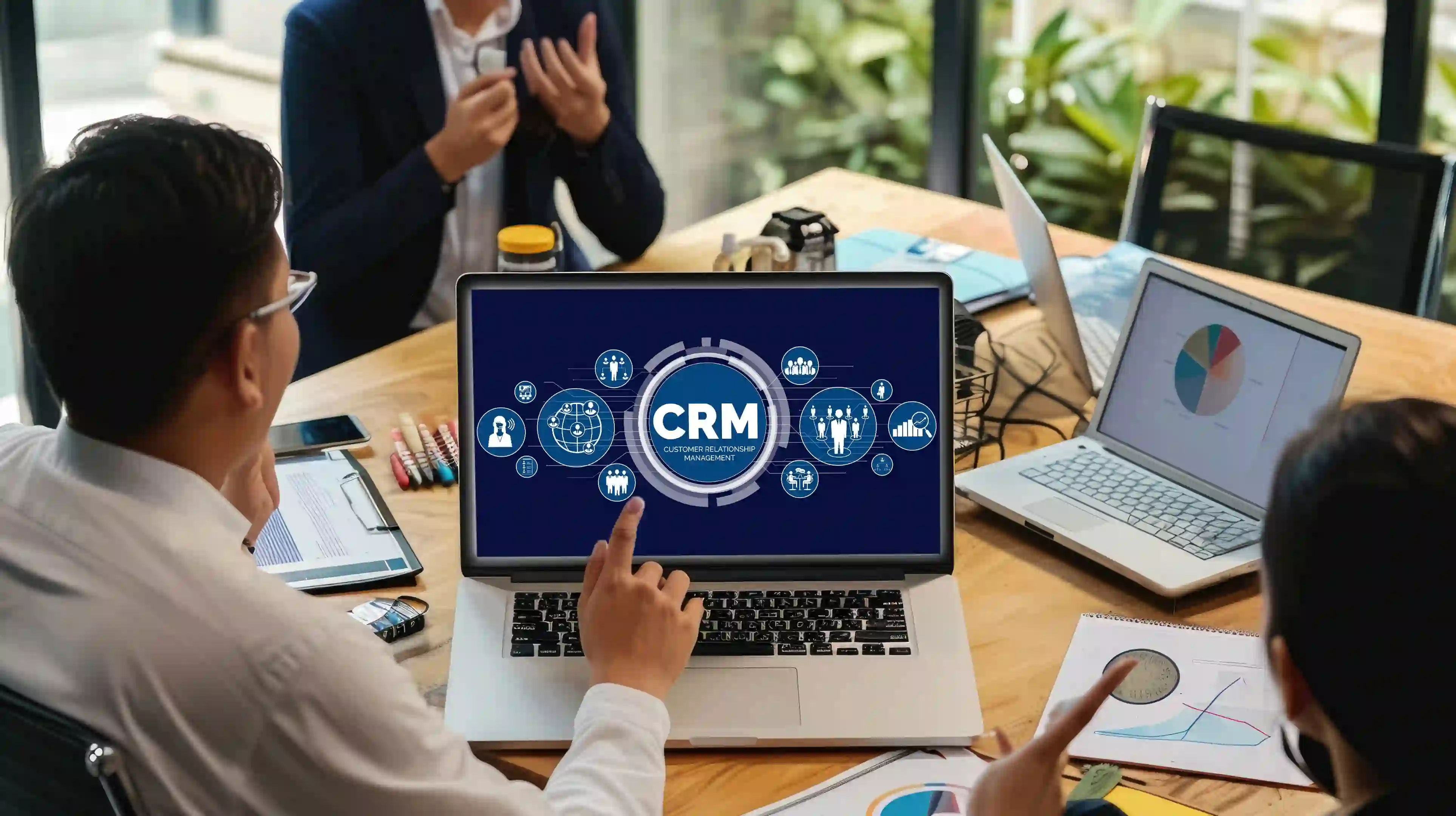
Customer Relationship Management, commonly referred to as CRM, is a strategic approach that businesses adopt to manage and optimise their interactions with both existing and prospective customers. CRM is typically underpinned by dedicated systems or software designed to collect, store, and analyse customer data in a structured and accessible manner.
More broadly, CRM integrates four fundamental elements:
- Structured customer data
- Technology in the form of CRM software
- Directed communication strategies
- Data-driven analytics for informed decision-making
The overarching objective of CRM is to maximise customer lifetime value (CLV) and to forge enduring, mutually beneficial relationships between businesses and their customers.
2. Core Components of a CRM System
For CRM implementation to function at its full potential, business practitioners must have a thorough understanding of its four principal components.
a. Centralised Customer Database
All customer data encompassing profiles, transaction histories, interaction records, and individual preferences is consolidated within a single unified system. This centralisation facilitates rapid, consistent data access across all departments and teams.
b. Customer Journey Tracking
CRM enables businesses to monitor the customer journey from the initial point of brand awareness through to the development of long-term loyalty. A comprehensive understanding of each stage in this journey allows businesses to deliver timely, contextually appropriate responses.
c. Omnichannel Integration
An effective CRM system integrates a diverse range of communication channels, including:
- WhatsApp and short messaging services (SMS)
- Social media platforms
- Websites and mobile applications
d. Automation Engine
Automation capabilities allow businesses to execute communication and marketing processes with greater efficiency. These include the delivery of welcome messages, reminders, and follow-up campaigns all without the need for constant manual intervention.
3. Customer Lifecycle Stages in CRM
A well-functioning CRM system is invariably anchored in a clear understanding of the customer lifecycle. There are five principal stages, each of which demands a distinct and considered strategic approach.
- Awareness: The customer first becomes acquainted with the brand and its offerings.
- Acquisition: The customer completes their initial purchase.
- Retention: The business works to keep the customer engaged and active.
- Loyalty: The customer transitions into a repeat buyer.
- Advocacy: The customer actively recommends the brand to others.
CRM strategies must be carefully calibrated to the characteristics of each stage in order to yield optimal outcomes.
4. Why Is CRM Essential for Business?
CRM is far more than a technological tool it constitutes the very foundation upon which lasting customer relationships are built. The following highlights several compelling reasons why CRM is indispensable for modern businesses.
a. Strengthening Customer Loyalty
When data is well-organised and accessible, businesses are better positioned to deliver personalised, highly relevant experiences to each customer thereby fostering long-term loyalty.
b. Driving Sales Growth
CRM equips sales teams with the ability to track opportunities methodically and expedite the closing process by drawing on comprehensive, up-to-date customer information.
c. Enhancing Operational Efficiency
The centralisation of data enables teams across the organisation to operate more swiftly and in closer alignment, significantly reducing duplication of effort and the potential for miscommunication.
d. Enabling Data-Driven Decision-Making
In-depth analysis of customer data empowers businesses to craft strategies that are more precisely targeted, evidence-based, and measurable.
5. Core Functions of CRM in Business Operations
CRM fulfils a number of essential functions that support diverse aspects of business operations.
- Customer data management, collecting and storing critical information such as names, email addresses, purchase histories, and individual customer preferences.
- Marketing automation, automatically sending emails, notifications, or campaigns in direct response to customer behaviour.
- Sales management, tracking the sales pipeline and monitoring the activities of the sales team.
- Customer support, elevating the quality of customer service through ticketing systems and comprehensive interaction histories.
6. Types of CRM
To fully harness the benefits of CRM, it is important to understand the distinctions between its principal types.
a. Operational CRM
This type focuses on the automation of core business processes, including sales, marketing, and customer service. It is the most widely adopted form of CRM among teams that engage directly with customers.
b. Analytical CRM
Analytical CRM is employed to conduct in-depth analysis of customer data, generating actionable insights that inform and strengthen strategic business planning.
c. Collaborative CRM
Collaborative CRM facilitates coordination and communication among internal teams, ensuring that the experience delivered to customers remains consistent across all touchpoints.
7. How CRM Works
At its most fundamental level, a CRM system operates through three interrelated stages.
- Data collection, customer data is gathered from a wide variety of touchpoints, including websites, social media platforms, and transaction records.
- Data storage and management, all collected data is stored within a centralised system, ensuring ease of access and efficient management.
- Data analysis and application, the data is subsequently leveraged to develop marketing strategies, improve service quality, and personalise customer communications.
8. Strategies for Effective CRM Implementation
For CRM to deliver tangible, measurable results, its implementation must be approached with careful planning and clear intent. The following steps provide a practical framework for effective deployment.
a. Define Clear Objectives
Establish whether the primary goal is to improve retention, increase sales, or enhance customer satisfaction. Well-defined, measurable objectives will serve as the foundation of your CRM strategy.
b. Select the Right CRM Platform
Choose a CRM system that is aligned with the specific needs of your business, the scale of your operations, and your available budget.
c. Integrate with Existing Systems
CRM performs at its most effective when connected to complementary tools, such as email marketing platforms, point-of-sale (POS) systems, or e-commerce solutions.
d. Provide Comprehensive Team Training
Ensure that all members of the team are proficient in using the CRM system, so that its benefits can be fully realised across the organisation.
e. Leverage Data for Personalisation
The more personalised the experience offered to customers, the greater the likelihood of conversion and the stronger the prospects for long-term loyalty.
9. Advanced CRM Strategies for Superior Results
For businesses seeking to elevate their CRM practice further, the following advanced strategies have demonstrated proven effectiveness.
a. Hyper-Personalisation
Utilise customer data to craft highly tailored experiences, such as AI-driven product recommendations, emails customised to individual names and preferences, and exclusive offers informed by prior purchase behaviour.
b. Predictive Analytics
Draw on historical data to anticipate future customer behaviour — including the likelihood of churn, the optimal timing for campaign execution, and the identification of high-value prospective customers.
c. Data-Driven Loyalty Programmes
Design loyalty programmes that are grounded in data insights, such as reward point systems, tiered membership structures, and exclusive vouchers tailored to specific customer segments.
d. Behavioural Segmentation
Segment customers based on observable behavioural patterns, including product browsing habits, purchase frequency, and levels of campaign engagement.
10. Key CRM Metrics to Monitor Consistently
To ensure that a CRM strategy is delivering the intended results, the following core metrics should be tracked on a regular basis.
- Customer lifetime value (CLV), the total value generated by a customer throughout their entire relationship with the business.
- Customer acquisition cost (CAC), the expenditure incurred in acquiring a single new customer.
- Retention rate, the proportion of customers who return to make repeat purchases within a defined period.
- Churn rate, the proportion of customers who discontinue use of the product or service.
- Conversion rate, the proportion of prospects who are successfully converted into active customers.
11. Common Pitfalls in CRM Adoption
Despite its considerable capabilities, CRM frequently fails to reach its full potential due to a number of recurring organisational errors.
- Absence of a clearly defined CRM strategy from the outset of implementation.
- Poorly organised or infrequently updated customer data.
- Insufficient training for the teams responsible for operating the CRM system.
- Failure to make use of the automation features available within the platform.
- Lack of routine data analysis to evaluate and improve ongoing performance.
By conscientiously avoiding these pitfalls, businesses are far better placed to realise the full return on their CRM investment.
12. The Future of CRM: Smarter Systems Through Artificial Intelligence
Rapid advancements in technology are rendering CRM systems increasingly sophisticated. Through the integration of artificial intelligence (AI), modern CRM platforms are now capable of:
- Predicting customer behaviour with a high degree of accuracy, based on historical data patterns.
- Automatically generating actionable recommendations for sales and marketing teams.
- Optimising the customer journey in real time, based on live behavioural signals.
These developments position CRM not merely as a management tool, but as a genuine engine of business growth one that is adaptive, intelligent, and continuously evolving.
Start Building Customer Loyalty with Stamps
Businesses that endure and flourish are not simply those with the superior product offering they are those most adept at sustaining meaningful relationships with their customers. CRM is the foundation upon which those relationships are built.
Do not wait until your customers have already moved to a competitor. Every day without a robust CRM strategy is a missed opportunity to deepen loyalty and drive retention. Begin mapping your customer journey, automate your communications intelligently, and measure the impact with precision.
Stampsis a CRM and loyalty platform trusted by hundreds of leading brands across Indonesia. With features specifically engineered for the needs of local businesses from reward point systems and customer segmentation to omnichannel campaign management Stamps enables you to transform raw customer data into measurable, real-world business growth.
Contact the Stamps team today and take the first step in your CRM journey.
